

Views: 0 Author: Site Editor Publish Time: 2026-11-26 Origin: Site


Dropping temperatures and rising winds demand reliable thermal protection for exposed skin. For generations, the classic woven fabric wrap served as the primary defense against winter chills. However, outdoor gear engineering has evolved significantly over the past decade. Continuous-loop neckwear has emerged as a highly adaptable, performance-driven alternative. Deciding between these two options requires a careful analysis of your specific activity profile, environmental hazards, and thermal requirements.
Recent market analyses of outdoor apparel trends reveal a definitive shift toward multifunctional, minimalist gear. Modern adventurers and industrial outdoor workers increasingly prioritize technical fabrics. These materials offer high thermal retention without restrictive bulk. When assessing this shift, operational functionality and safety consistently outrank traditional aesthetics. This comprehensive guide breaks down the structural differences, safety protocols, and convenience of both accessories. By the end, you will know exactly when to swap bulky winter layers for a streamlined, engineered alternative.
Key Takeaways
Activity Level Dictates the Choice: Technical neckwear excels in high-movement activities like hiking, skiing, and running. Conversely, woven fabrics are better suited for static, low-intensity cold exposure.
Safety and Convenience: A closed-loop design eliminates the risk of loose ends snagging in moving machinery or whipping unpredictably in high winds.
Seamless Integration with Gear: The snug, elastic profile fits perfectly under protective headgear. This makes it an indispensable component for motorcyclists, snowboarders, and cyclists.
Unmatched Versatility: Flexible technical fabrics easily transform into a headband, beanie, face mask, or balaclava to match shifting weather conditions.
Year-Round Temperature Regulation: Selecting the appropriate material thickness allows this gear to provide winter insulation and summer ultraviolet protection.
Making an informed decision about your outdoor apparel requires understanding the structural and functional differences between these garments. Both serve the fundamental purpose of shielding the throat and chest from environmental elements. Yet, their engineered designs cater to entirely different operational scenarios.
A traditional scarf is defined as a long, rectangular piece of fabric. It must be manually wrapped, tied, or draped around the body. Historically utilized for both warmth and aesthetic appeal, these garments are predominantly designed for static cold-weather protection. Common construction materials include heavy wool, cashmere, acrylic, and cotton.
These garments rely on overlapping layers of thick fabric to trap heat. Consequently, they inherently add significant bulk around the collar and chest. This volume provides excellent insulation during low-intensity activities, such as standing in a freezing city center. However, the manual wrapping mechanism is flawed for active use. The fabric easily loosens under movement, requiring constant readjustment.
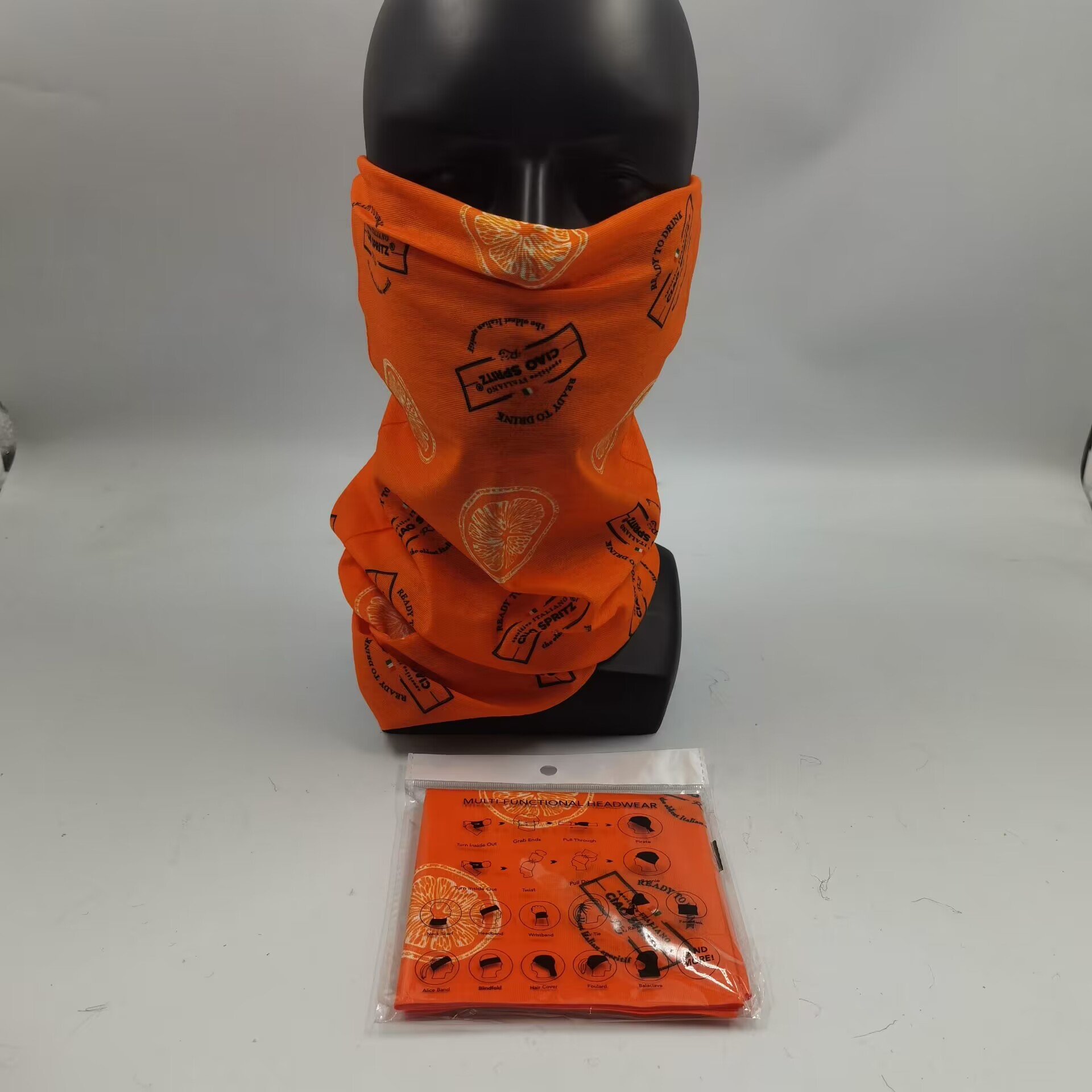
In stark contrast, modern athletic neckwear operates as an engineered piece of performance apparel. It features a continuous, closed-loop fabric cylinder designed to slip over the head. It sits securely against the skin without any need for tying. A primary design advantage lies in its specific manufacturing process. High-quality models are manufactured as a Seamless Tube. This specific construction technique eliminates irritating stitches that cause severe chafing during repetitive athletic movement.
Common materials include Merino wool, advanced polyester blends, and moisture-wicking synthetics. Engineers choose these textiles specifically for their horizontal stretch, high durability, and efficient sweat management.
When analyzing equipment efficiency, functionality must align with the demands of the environment. The transition from traditional winter wear to modern athletic tubes is driven by distinct operational advantages.
The most significant operational flaw of a traditional scarf in an active setting is its dangling ends. Consider the environment of a windy alpine ridge. Loose fabric obstructs your vision and unravels rapidly. More critically, in environments involving motorized vehicles, bicycles, ski lifts, or heavy machinery, hanging fabric presents a severe snagging hazard.
A continuous-loop design mitigates this risk entirely. The garment sits flush against the skin, ensuring zero loose ends. Its secure, stay-put nature means that once pulled into place, it remains anchored. Users can focus entirely on their physical activity without safety concerns or the frustration of re-tucking runaway fabric.
During strenuous hikes or winter workouts, the human body generates significant heat and perspiration, even in sub-zero temperatures. Bulky wool or cotton garments trap this sweat directly against the skin. Once physical exertion stops, this trapped moisture cools rapidly. This creates a dangerous wet and freezing sensation that accelerates core heat loss.
Technical performance gear is explicitly designed to wick moisture away from the skin. Synthetic blends utilize capillary action. They pull sweat to the outer surface of the fabric where it evaporates quickly. This superior moisture management keeps the skin dry and maintains a stable core body temperature.
Efficiency in backcountry gear comes down to adaptability. A standard wrap generally serves one single function. Conversely, an elastic fabric tube functions as a multi-tool of clothing. Through simple folding and twisting techniques, one single piece of fabric replaces multiple accessories. It serves as an ear warmer, a lightweight beanie, a dust filter, or a heavy-duty sweatband. This versatility proves invaluable for individuals minimizing their pack weight.
| Feature | Traditional Scarf | Performance Neckwear |
|---|---|---|
| Design Structure | Open-ended rectangle | Continuous closed loop |
| Moisture Control | Poor traps sweat | Excellent wicks moisture |
| Safety Profile | High snag hazard | Zero snag risk |
| Helmet Compatibility | Incompatible adds bulk | Seamless integration |
Selecting the right gear requires a deep understanding of textile properties and how different garments interact within a system. Two critical engineering concepts in this regard are material thickness and thermal layering mechanics.
Not all accessories deliver the same thermal output. Their insulation properties are heavily dictated by their Fabric Weight, which determines their optimal seasonal application. Lightweight variations, typically constructed from 100 percent polyester microfiber, are perfect for hot and humid environments. They excel in summer fishing, desert hiking, and providing critical ultraviolet sun protection.
Midweight options like microfleece are tailored for cool, windy, transitional weather. Furthermore, heavyweight options featuring double-layer fleece are built for freezing conditions and high wind chill. Matching the textile thickness to the specific environment prevents winter hypothermia and dangerous summer overheating.
In outdoor performance apparel, Layering is a systematic, engineered approach to managing moisture and trapping body heat. A standard system consists of a base layer, an insulating mid-layer, and a protective outer shell. A bulky woven wrap disrupts this technical system. The excess fabric prevents outer jackets from zipping up entirely. This compromises the collar seal and allows cold drafts to penetrate the chest.
Specifically, a slim, form-fitting fabric tube tucks perfectly beneath a base layer or a winter jacket collar. It bridges the vulnerable gap between the torso and the head. This seals out drafts efficiently without adding restrictive bulk around the throat.
While highly adaptable across the board, specific scenarios render the structural benefits of a continuous loop vastly superior to any conventional neckwear.
Safety protocols in alpine sports and cycling mandate the use of properly fitted protective headgear. A helmet must sit snugly against the skull and strap securely under the chin to disperse impact energy correctly. You simply cannot wear a thick woven wrap safely under a ski or motorcycle helmet. The excess fabric interferes with the chin strap and alters the structural alignment of the helmet.
The thin, highly elastic profile of performance neckwear ensures a Helmet Fit that is both comfortable and compliant with safety standards. It pulls up smoothly over the nose and ears, resting flat underneath the helmet padding without compromising protective integrity.
For dedicated backpackers, every ounce of weight and square inch of pack space is meticulously calculated. Traditional winter wraps are heavy and consume significant volume within a pack. A technical Neck Gaiter is highly packable, compressing down to almost zero space. It easily stuffs into a small jacket pocket when not deployed.
Mountain microclimates are notoriously unpredictable. A hiker might start in a freezing valley and end up sweating on a sun-exposed ridge. This accessory provides immediate thermal adaptability, transitioning from an insulating layer to a cooling sweatband in seconds.
Minimalist travel relies strictly on garments serving multiple purposes. A low-profile fabric tube is an essential item for any professional packing list due to its high utility. Beyond weather protection, it acts as a highly effective particulate barrier. It pulls up over the mouth to block dust on unpaved trails or filter out smog in congested urban centers.
Despite the technical superiority of athletic gear in active scenarios, the classic wrap remains highly relevant in specific contexts. Objective evaluation requires acknowledging where modern activewear falls short.
In environments demanding professional attire, aesthetic presentation plays a crucial role. A sleek, synthetic fabric tube often clashes visually with formal business wear. The texture and drape of a classic cashmere wrap over a tailored trench coat cannot be replicated by athletic polyester. For office commutes and formal evening events, the traditional option remains the gold standard.
When you are entirely stationary in freezing temperatures, your body does not generate active heat. Examples include sitting in stadium stands, ice fishing, or observing wildlife. In these static situations, moisture-wicking properties become irrelevant. Sheer insulation volume becomes paramount. A heavy, blanket-style wool wrap provides a massive amount of trapped air space and radiant heat retention that a thin athletic garment cannot match.
When building an effective cold-weather system, outdoor professionals frequently evaluate three primary facial protection accessories. Understanding their structural limitations is crucial for optimizing field comfort.
The primary advantage here lies in exceptional modularity. Because it rests naturally around the cervical spine, users can instantly pull the top edge over the chin or nose when wind chill drops. This rapid adjustability makes it the most versatile option for environments featuring rapidly fluctuating temperatures and varying physical exertion levels.
A balaclava is a tailored, close-fitting garment designed to cover the entire head, neck, and face. It leaves only a small opening for the eyes. This fixed structural design provides maximum thermal retention for extreme, sub-zero environments like high-altitude mountaineering. However, if a user begins to overheat during strenuous aerobic activity, a balaclava cannot be easily vented without bunching uncomfortably under the chin.
Standard outdoor face masks target specific protection of the mouth and nose, typically secured via ear loops. While highly effective at blocking freezing wind from entering the respiratory system, they completely lack lower neck insulation. This structural limitation leaves a vulnerable gap above the jacket collar, making them inadequate as standalone winter gear.
The true functional value of this accessory is rooted in its geometric advantage. Without restrictive zippers or rigid seams, the elastic fabric can be manipulated into numerous field configurations.
In its default state, the fabric gathers loosely around the throat. This configuration serves a vital thermal purpose. By occupying the empty space between bare skin and a rigid jacket collar, it prevents warm air generated by your core from escaping upward.
When facing biting headwinds or blowing snow, the front edge extends upward to rest securely across the bridge of the nose. Modern performance fabrics are engineered for high breathability. This configuration protects sensitive skin from frostnip while allowing moisture vapor from exhalation to escape freely.
During high-output aerobic activities like trail running, the primary physiological goal shifts from heat retention to moisture management. By folding the fabric inward upon itself several times, it transforms into a thick, highly absorbent headband. This captures heavy perspiration before it runs into the eyes.
If ambient temperatures drop unexpectedly, the tube rapidly converts into a makeshift hat. By pulling the fabric inside out, twisting the center tightly to close the hole, and folding one half back over the other, it creates a closed-top beanie. This provides exceptional thermal protection under climbing helmets.
Not all products in this category are engineered equally. Making a long-lasting purchasing decision requires evaluating specific material properties and dimensional specifications based on industrial or athletic use cases.
The functional foundation of any performance garment is its material. Look for products utilizing 100 percent polyester microfiber for maximum durability and rapid moisture wicking. This specific synthetic construction is ideal for high-intensity, sweaty workouts. Alternatively, Merino wool blends trap dead air to provide reliable insulation even when wet, naturally resisting odor-causing bacteria over multi-day expeditions.
A critical technical specification to verify is four-way stretch. This indicates the fabric incorporates elastane fibers woven to expand both horizontally and vertically. Standard professional dimensions typically sit around 25 centimeters wide by 50 centimeters long. This specific sizing, combined with four-way stretch, ensures the garment pulls over the nose comfortably without applying excessive pressure on the bridge.
Ultraviolet radiation is not exclusively a summer concern. Winter athletes face intense UV exposure due to the albedo effect, where bright white snow reflects up to 80 percent of the sun's rays back upward. Selecting a product with a verified Ultraviolet Protection Factor rating of 30 or higher is essential for preventing severe tissue damage on the lower face during alpine operations.
Conclusion
While the traditional woven wrap will always hold a prestigious place in formal winter fashion, modern athletic neckwear stands as the undeniable champion for outdoor performance. If your operations involve physical exertion, protective headgear, or unpredictable microclimates, a continuous-loop design should absolutely replace your conventional cold-weather accessories. By selecting the correct material specifications and utilizing its seamless engineering, you achieve a comfortable, bulk-free thermal system that adapts instantly to environmental shifts. Ready to upgrade your outdoor clothing system? Explore high-performance, customizable options at Maxship to find the exact specifications your next project or adventure requires.
Thermal retention depends heavily on the material composition, but an athletic fabric tube is often more efficient at trapping body heat. Because it sits flush against the skin and seals the gap at your jacket collar, it actively prevents cold drafts from entering. A traditional wrap, while thicker, often leaves structural gaps that compromise overall insulation.
A seamless tube is manufactured using a specialized cylindrical knitting process that entirely eliminates vertical seams. This engineering choice prevents the chafing, skin irritation, and structural weak points commonly found in standard stitched winter accessories, making it vastly superior for repetitive athletic movements.
Yes, absolutely. Lightweight models constructed from moisture-wicking polyester microfiber are excellent for summer activities like deep-sea fishing and distance running. They actively protect the skin against severe sunburn and utilize evaporative cooling to absorb sweat, effectively lowering your perceived body temperature.
They are universally considered essential gear by professional outdoor guides. Their lightweight nature, extreme packability, and unique ability to serve as a face covering or sweat-absorbing headband make them far superior to bulky winter wraps on rugged trails where pack space is a premium commodity.
The garment should fit snugly against the skin without causing uncomfortable constriction around the throat or nose. High-quality models utilize a four-way stretch fabric that allows the tube to grip the face securely during movement while retaining enough elasticity to snap back to its original shape when lowered.
Most synthetic microfiber and merino variations should be machine washed on a gentle cycle using cold water and mild detergent. It is highly recommended to air dry them by laying them flat. Avoiding the high heat of a tumble dryer is crucial to maintain the structural elasticity of the elastane fibers and prevent technical fabrics from degrading.


