

Views: 0 Author: Site Editor Publish Time: 2026-06-20 Origin: Site


Not all "straw" actually grows in a field. Today, the term has evolved into a massive catch-all category. It describes almost any material woven to mimic a traditional summer aesthetic. You might think you are buying a dried grass product, but you could easily be purchasing engineered paper or marine fibers.
Purchasing a Straw Hat without understanding its specific fiber composition often leads to severe buyer's remorse. You might face misaligned expectations regarding durability, shape retention, and heat management. A paper-based hat can melt under heavy rain, while a tightly woven synthetic piece might trap heat and block the breeze entirely.
Our purpose here is to deconstruct the exact fibers, weaves, and synthetic options used in modern hat-making. You will gain a verifiable, expert-backed framework to evaluate quality objectively. By the end of this guide, you will know exactly how to select the right material for your climate, budget, and specific daily use cases.
Material variety: A "straw hat" can be woven from palm fronds, marine grasses, tree fibers, or highly engineered paper yarns.
Natural vs. Synthetic tradeoffs: A natural straw hat typically offers superior breathability and patina over time, while paper/synthetic variants offer uniform aesthetics and lower upfront costs.
Weave density equals value: The tightness of the weave (not just the raw material) dictates the labor involved, the final price, and the hat's UPF (Ultraviolet Protection Factor) efficacy.
Use-case alignment: Palm leaf is built for rugged durability, Toquilla for formal elegance, and Raffia for crushable travel.
Before examining specific plant species, you must understand how base materials influence daily wear. You cannot judge a hat solely by its appearance on a shelf. Instead, we use a three-pillar evaluation framework to determine true performance.
Assess the inverse relationship between a hat's ability to vent heat and its rigidity. Stiffer hats hold crisp, formal shapes beautifully. However, achieving this stiffness often relies on sizing agents and heavy chemical stiffeners. These invisible coatings fill the microscopic gaps between the woven fibers. Consequently, they reduce natural airflow. If you need maximum ventilation for a humid climate, you must often sacrifice razor-sharp structural rigidity in favor of softer, untreated fibers.
Different plant fibers react dramatically to humidity, sweat, and unexpected rain. We call this the "swell factor." Some porous fibers absorb moisture and swell, creating a tighter seal against the sun but risking mold if stored improperly. Other fibers dry out rapidly in arid climates. When they crack, the hat loses its structural integrity. You must understand why some fibers shatter when completely dry, while others turn to mush when soaked.
Frame your initial purchase price against the material's expected lifespan. You must account for regular UV exposure, sweat degradation, and physical handling. A cheaper synthetic option might look identical to a premium natural weave on day one. However, after a season of intense sunlight, plastics degrade and paper yarns warp. Calculating the true cost means dividing the price by the number of seasons it will actually survive.
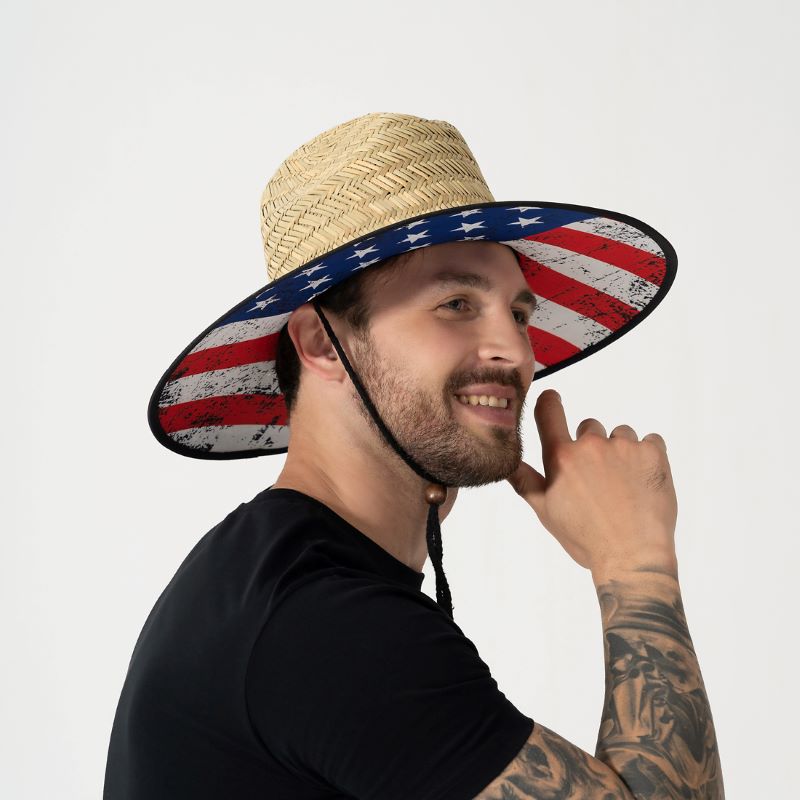
When you seek authentic, plant-based headwear, you enter a world of varied botanical origins. A true Natural Straw Hat relies on specific harvesting regions and localized traditional skills. Here is how the core natural options break down.
Origin & Specs: Authentic Panama hats do not come from Panama. Artisans weave them entirely from the Carludovica palmata plant, which grows natively in the coastal and mountainous regions of Ecuador.
Evaluation: This material represents the pinnacle of formal summer headwear. Toquilla is extremely lightweight and boasts phenomenal natural breathability. Its fine, pliable fibers allow master weavers to create incredibly dense, linen-like textures that block sunlight while letting heat escape.
Risks: Toquilla requires environmental humidity to remain flexible. It is highly vulnerable to cracking at the pinch (the front dents of the crown) if you handle it aggressively. If you live in an ultra-dry desert climate, the fibers can desiccate and snap without proper conditioning.
Origin & Specs: Harvesters peel raffia from the outer segments of the raffia palm. This tree grows predominantly in Madagascar and certain coastal regions of Africa.
Evaluation: Raffia naturally contains high levels of structural resins. These embedded resins give the fiber a "memory." It makes the final product highly flexible, crushable, and exceptionally resilient for packing in a suitcase. You can roll it up, arrive at your resort, and easily pop it back into shape.
Risks: Because of its inherent softness, raffia can lose crisp structural lines over time. It leans heavily toward casual, beach-ready aesthetics rather than tailored formality.
Origin & Specs: Makers use heavy-duty palm fronds, typically sourced from Mexico or Guatemala, to create these robust hats. You will frequently see palm leaf utilized in authentic western and cowboy styles.
Evaluation: Palm leaf delivers exceptional, uncompromising durability. It thrives in extreme outdoor working conditions. Uniquely, you can repeatedly soak a palm leaf hat in clean water. As the water evaporates from the heavy fibers, it creates a built-in evaporative cooling effect for the wearer.
Risks: It is significantly heavier than Toquilla or Raffia. The rugged, overlapping weave presents a much less refined appearance, making it unsuitable for formal suiting.
Origin & Specs: These utilize marine grasses and robust hemp stalk fibers, offering a highly organic, unbleached look.
Evaluation: Seagrass features a distinctive, loose, and heavily textured appearance. Because the fibers resist tight compression, the resulting weave is highly ventilated. The air flows freely, making it a favorite for gardening and casual lounging.
Risks: Seagrass is notoriously floppy. Manufacturers often weave a rigid inner wire into the brim to force shape retention. Furthermore, the inherently looser weave limits its baseline sun protection. UV rays can penetrate the visible gaps.
Many modern hats rely on highly engineered alternatives. These materials dominate the mainstream retail market. They offer excellent visual consistency but harbor distinct functional compromises.
The Reality: Historical Shantung originally referred to a specific type of woven silk. Today, the hat industry uses the term differently. Modern Shantung is a machine-spun, high-tensile paper yarn known as Washi. Manufacturers often coat this paper tightly in acrylic to mimic natural fibers.
Evaluation: Shantung offers a flawless, perfectly uniform finish. It mimics the look of ultra-fine Panama hats at a fraction of the cost. The acrylic coating makes it highly resistant to sweat staining, maintaining a pristine look for months.
Risks: It provides zero natural breathability. The synthetic coatings trap heat against your scalp. Furthermore, if you crush a Shantung hat, you cannot reshape it easily. The paper fibers crease permanently.
The Reality: Toyo is essentially cellophane-coated paper. Production occurs primarily in Japan, where machines spin the treated paper into smooth, durable strands.
Evaluation: Toyo yields a smooth, slightly shiny finish. It boasts good structural durability and takes rich dyes very well. It serves as an excellent material for mid-tier, colorful fashion hats.
Risks: Toyo is noticeably heavier and much warmer on the head than any natural option. It acts as an insulator rather than a ventilator.
The Reality: The term "Milan" causes frequent confusion. It refers to both a specific braided weave technique and a synthetic/hemp blend fiber used to achieve that technique.
Evaluation: Milan boasts high structural integrity. It offers a classic, retro aesthetic often associated with mid-century fedoras. The synthetic blend holds intense, vibrant dye colors without fading under UV light.
Raw material is only half the equation. The weaving method dictates the final product's ultimate strength, flexibility, and price point. Two hats made from identical Toquilla palm will perform entirely differently based on the artisan's handiwork.
Artisans utilize distinct patterns to manage airflow and structural density. Understanding these two dominant styles helps you predict performance.
| Weave Type | Visual Pattern | Weight & Feel | Durability | Best Use Case |
|---|---|---|---|---|
| Brisa | Cross-weave creating tiny, raised diamonds | Lighter, highly ventilated | Moderate (prone to snagging) | High-heat climates, casual elegance |
| Cuenca | Herringbone / V-shaped overlapping pattern | Slightly heavier, dense | High (excellent weather resistance) | Daily wear, travel, variable weather |
Retailers often use "grades" (e.g., Grade 10 vs. Grade 40) to market hats. We must de-mystify this system. Higher grades mean the artisan split the raw fibers into thinner, finer strands. Consequently, they executed a much tighter weave.
A Grade 10 hat might take a week to weave. A Grade 40 hat can take six months. The higher grade exponentially increases labor costs. The resulting texture resembles smooth, luxurious linen rather than rough grass. A tighter weave also directly increases the hat's UPF rating by eliminating micro-gaps where sunlight normally penetrates.
You cannot buy effectively based on looks alone. Use the following decision matrix to align the physical properties of the material with your lifestyle demands.
For Formal Events & Maximum Refinement: Recommend Toquilla (Panama) or high-grade Shantung.
Decision driver: You need absolute uniformity and fine texture to complement a summer suit or formal dress.
For Resort Travel & Packing: Recommend Raffia.
Decision driver: You require flexibility and natural resin memory. It must survive compression inside luggage without permanent creasing.
For Rugged Outdoor Work: Recommend Palm Leaf.
Decision driver: You need high tensile strength and the ability to utilize moisture-activated cooling. Weight is secondary to survival.
For Budget-Friendly Fashion: Recommend Toyo or Toyo-blends.
Decision driver: You want low upfront costs and rigid structural consistency for seasonal, trendy outfits.
Once you select your ideal material, improper handling will destroy it rapidly. We see countless premium hats ruined within weeks due to basic user errors.
Establish this hard rule immediately: never pinch a hat by the crown. When you grab the front dents of the hat to take it off, you flex the fibers sharply. Over time, those specific fibers will fatigue, dry out, and split open. Always handle your headwear gently by the brim.
You must understand the critical difference between a hat getting "humid" versus getting "soaked." Exposure to gentle, humid air is fantastic for Toquilla palm—it keeps the fibers supple. However, getting drenched in a rainstorm ruins the shape of almost any fine weave, unless it is a heavy-duty Palm Leaf. If your hat gets slightly wet, let it air dry naturally away from direct, artificial heat sources.
Gravity is the enemy of a well-shaped brim. When storing your hat on a flat surface, always rest it upside-down on its crown. Leaving it flat on its brim will cause the edges to warp and distort within days. Furthermore, keep it in a climate-controlled environment to prevent fiber rot in damp basements, or brittle drying in hot attics.
Best Practice: Mist your Toquilla hat lightly with clean water if you live in a notoriously arid climate.
Common Mistake: Leaving a Shantung hat in the back window of a hot car. The acrylic coating can warp irreversibly.
Ultimately, the "best" material does not exist in a vacuum. It is entirely dependent on your local environment, daily activity level, and budget. Natural fibers offer unparalleled cooling and authentic patina, while engineered papers and synthetics deliver sharp, affordable consistency.
Your next step is simple. Assess your primary use case today. If you need crushable luggage companions, explore packable Raffia styles. If you require formal elegance, look toward authentic Toquilla. Navigate to your preferred category page, verify the weave density, and invest in a material that actually supports your lifestyle.
A: No. A significant portion of the modern market consists of Shantung and Toyo, which are heavily engineered, coated paper yarns. Manufacturers use these to mimic natural fibers while keeping mass-production costs low and visual consistency high.
A: It depends on the specific plant fiber. Ruinous rain will warp and destroy a delicate Toquilla Panama hat. However, acceptable rain on a thick Palm Leaf hat causes no damage. In fact, Palm Leaf thrives when soaked and reshaped.
A: Cracking occurs due to fiber desiccation and improper handling. If you constantly pinch the top crown to remove the hat, the repeated stress breaks the dry, brittle fibers. Always pick it up by the brim.
A: Generally, yes. Authentic Toquilla or Palm Leaf is fully biodegradable and sourced from renewable plant harvests. Conversely, paper synthetics like Shantung often contain acrylic coatings or cellophane, which do not break down naturally in the environment.


