

Views: 0 Author: Site Editor Publish Time: 2026-09-29 Origin: Site


Global temperatures consistently shatter historical records. For crews operating in construction, agriculture, and municipal services, severe heat stress has escalated from a seasonal nuisance to a critical occupational hazard. Immediate and effective intervention is no longer optional.
Enter active thermoregulation headwear. Initially dismissed by some as a viral internet novelty floating across social media feeds, this innovative gear has rapidly evolved. Today, it stands as a highly effective and legitimate piece of personal protective equipment. By actively forcing air circulation around the head and neck, these hats provide immediate relief in environments where stagnant and humid air renders natural sweating inefficient.
As the market floods with various iterations of this technology, procurement managers and business owners must tread carefully. Not all safety hats meet rigorous industrial standards. We will dissect the exact specifications, safety certifications, and performance metrics you need to evaluate before committing to a bulk purchase.
Looking at recent industrial procurement trends, there is a definitive shift toward active thermoregulation gear. Occupational safety regulatory bodies are increasingly penalizing inadequate heat stress management. This regulatory pressure pushes companies to move away from purely passive solutions like standard shade tents. Market analysis indicates a surging demand for wearable cooling safety equipment. This surge is driven by the sheer necessity to maintain operational efficiency during extreme summer months without compromising worker safety.
When ambient temperatures exceed 90 degrees Fahrenheit, the human body relies almost entirely on sweat evaporation to maintain a safe core temperature. In high-humidity environments, this natural process stalls. A modern cooling fan hat forces ambient air across the face, neck, and scalp. This continuous airflow accelerates the evaporation of sweat. It significantly lowers the perceived skin temperature and delays the onset of heat exhaustion.
For business owners, the return on investment is highly quantifiable. Heat-related illnesses lead to significant downtime, increased workers compensation claims, and potential regulatory fines. By equipping crews with active cooling gear, employers maintain higher productivity levels during peak hours. They also reduce the frequency of mandatory shade breaks and demonstrate a proactive commitment to workplace safety.
Understanding the power delivery systems of these devices is critical for procurement managers. The most effective units on the market utilize a hybrid power approach. They seamlessly combine photovoltaic technology with modern energy storage.
The primary energy source comes from miniature solar panels integrated into the brim or crown. High-quality models typically use monocrystalline silicon panels. These offer superior efficiency rates compared to older polycrystalline versions. When exposed to direct and unobstructed sunlight, these panels generate enough immediate voltage to drive the fan motor continuously. This direct-drive capability means that during peak sunlight hours, the fan operates infinitely without drawing any power from the internal battery.
Relying strictly on solar power presents obvious operational limitations. Outdoor crews frequently transition between direct sunlight and shaded areas. Early morning shifts, late afternoon work, or overcast days simply do not provide sufficient solar radiation to keep a direct-drive fan spinning at optimal speeds.
To ensure continuous airflow regardless of weather conditions, procurement teams should exclusively source a rechargeable fan hat. These dual-powered models feature a built-in lithium-ion or lithium-polymer battery. When the worker is in the sun, the solar panel powers the fan and simultaneously trickle-charges the battery. When the worker enters the shade, the system instantly switches to battery power. This hybrid design is an absolute non-negotiable feature for serious occupational use.
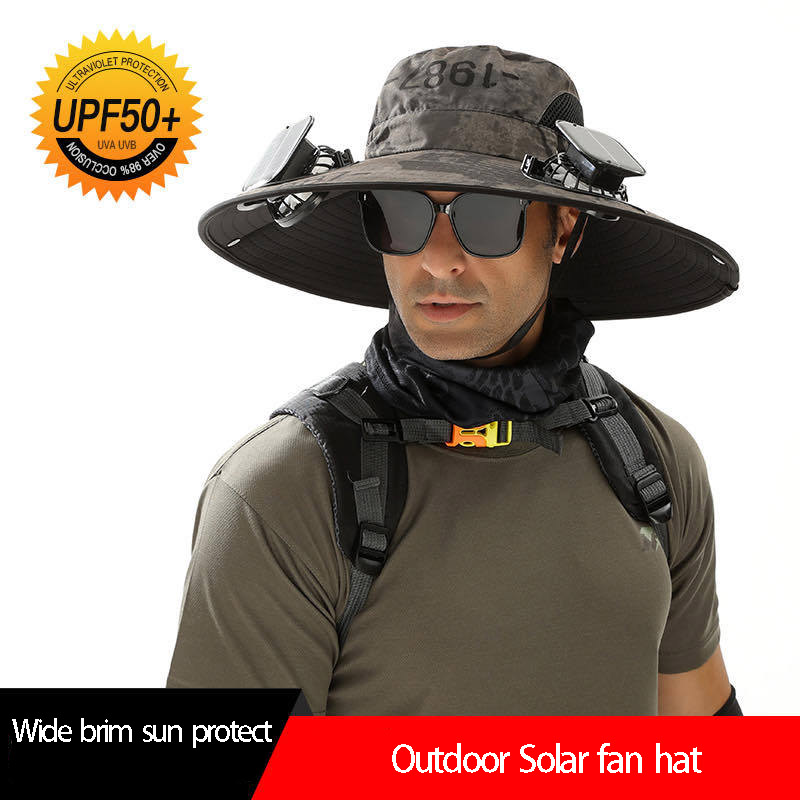
Before committing to a wholesale order, buyers must evaluate the product against strict performance and safety metrics. The following features dictate the difference between a reliable piece of safety equipment and a substandard novelty item that will fail within a week on a job site.
| Component | Substandard Consumer Novelty | Industrial-Grade Standard |
|---|---|---|
| Motor Type | Brushed Motor | Brushless DC Motor |
| Battery Capacity | 500 to 800 milliampere-hours | 2000 to 4000 milliampere-hours |
| Fabric Protection | Untreated Cotton | Certified UPF 50 Nylon Blend |
| Brim Width | Less than 7 centimeters | 9 to 12 centimeters |
| Water Resistance | None | IPX4 or IPX5 Rating |
While the fan provides active cooling, the fabric provides crucial passive protection. Occupational exposure to ultraviolet radiation is a leading cause of skin cancer among construction and agricultural workers. Standard cotton caps often only provide a protection factor of 5. This allows massive amounts of radiation to penetrate the fabric during an eight-hour shift.
Buyers must insist on independent testing certifications proving the fabric operates as a true UPF50 sun hat. This rating indicates that the fabric blocks 98 percent of the sun rays. Ensure the supplier uses tightly woven and treated synthetic materials like high-density nylon or polyester blends. These advanced textiles will not lose their protective qualities after a few cycles in the washing machine.
The effectiveness of sun protection is directly tied to the physical dimensions of the brim. A standard baseball cap leaves the ears and the back of the neck completely exposed to severe sunburn. Imagine a landscaper spending six hours hunched over garden beds. A small brim offers zero protection for their cervical spine area.
For industrial applications, a broad brim is mandatory. The ideal width ranges from 9 to 12 centimeters. This specific dimension creates a comprehensive shadow footprint that covers the nose, cheeks, ears, and neck. A wider brim also acts as a canopy to channel the airflow generated by the fan downward across the face. This architectural detail maximizes the evaporative cooling effect.
The mechanical heart of the system is its fan motor. Cheap consumer models utilize brushed motors. These suffer from internal friction, generate excessive whining noise, and have a notoriously short operational lifespan. If a fan breaks on day two of a roofing job, the entire investment is wasted.
For bulk commercial purchasing, specify units equipped with brushless DC motors. Brushless motors operate quietly, which is vital for worksite communication, and they boast a lifespan of up to 10,000 hours. Buyers should also check the variable speed controls. High-speed settings are necessary for extreme mid-day heat. Low-speed settings conserve battery life during milder morning conditions.
Different outdoor professions face unique environmental challenges. A generic approach is rarely effective in business procurement. Buyers must align the specifications with the specific hazards of their industry to ensure maximum efficacy and worker compliance.
Workers in these sectors operate in extreme heat radiating from asphalt and metal surfaces. A roofer working in 95-degree ambient heat might actually be enduring 115-degree radiant heat from the shingles below them.
For these demanding environments, high durability is paramount. Look for impact-resistant fan housings that can survive being dropped from scaffolding. High-visibility safety colors such as ANSI-compliant neon yellow or bright orange are often required. Reflective striping along the brim is highly recommended for roadwork crews to ensure visibility to oncoming traffic.
Agricultural and landscaping crews face constant direct sunlight and heavy airborne debris. Harvesting crops and moving soil generate massive amounts of dust that can quickly destroy exposed electronics.
The core need here is maximum coverage via an oversized wide brim outdoor hat design. The fan motor must feature a fine mesh intake filter or a sealed IP54 rating. This prevents dust and pollen from clogging the fan blades or grinding down the brushless motor bearings over time.
For many organizations, protective gear also serves as a visual extension of the company brand. Bulk purchasing offers a lucrative opportunity to customize these items. You can turn functional safety equipment into a cohesive uniform or a high-value corporate giveaway.
Customizing a promotional sun hat is an excellent strategy for brand visibility. Whether you are outfitting a landscaping fleet or providing premium gifts for an outdoor corporate retreat, a branded item ensures your logo is prominently displayed in public spaces. Unlike cheap promotional pens that are quickly discarded, high-tech solar gear offers tangible daily value to the user. This ensures it will be worn repeatedly across the community.
When negotiating with a wholesale supplier, clarify the customization limitations early in the process. Because the solar panel occupies the top of the crown, traditional center-front embroidery may not be physically possible. Ask the supplier if logos can be placed on the side panels or printed underneath the brim. Heat-pressed vinyl or screen printing are often better alternatives for lightweight synthetic fabrics. Embroidery needles puncture the fabric, which can compromise the waterproof integrity if not sealed properly.
Procurement is a delicate balancing act between upfront costs and long-term value. While it is tempting to source the absolute cheapest models available on overseas marketplaces, doing so often results in high failure rates and compromised worker safety.
Wholesale pricing is heavily dependent on volume. Standard factory minimum order quantities for blank units typically range from 50 to 100 pieces. If you require custom dye colors or specific logo applications, the factory must halt standard production to set up your design. Consequently, custom minimums usually rise to 500 or 1,000 units. Negotiate tiered pricing structures to understand the exact cost-per-unit breaks before finalizing a massive purchase order.
When reviewing quotes, be highly vigilant for red flags that indicate a substandard product. If a dual-powered model is priced similarly to a basic cotton cap, the manufacturer is likely cutting dangerous corners. They may be using unregulated lithium batteries that pose fire risks or low-grade brushed motors that will burn out rapidly. Inspect photos for exposed wiring. High-quality units feature internal wire routing. Exposed wires are a snag hazard and will easily break in an industrial environment.
Active cooling headwear represents a smart and modern investment in the health and efficiency of your workforce. By actively reducing heat stress, these innovative garments improve outdoor worker safety, boost daily comfort, and ultimately protect your bottom line from heat-related liabilities.
When navigating the wholesale market, prioritize dual-power technology, certified UV protection, and durable brushless motors. Choosing reputable suppliers over the absolute lowest price guarantees that the safety equipment will survive the rigors of an industrial job site.
Equip your team with the protection they deserve. If you are ready to upgrade your crew's summer gear, explore the industrial-grade options at Maxship. Reach out to a verified supplier today to discuss bulk pricing, request a physical sample, and select the exact specifications that align with your operational needs.
Yes, provided you purchase a dual-powered model with a built-in rechargeable battery. Solar-only models are directly wired to the photovoltaic panel and will immediately stop working without direct sunlight. Dual-power models store energy via USB charging. This allows the fan to continue circulating air when workers move indoors, step into shaded areas, or work during early morning shifts.
For a standard eight-hour industrial shift, procurement managers should look for battery capacities between 2000 and 4000 milliampere-hours. While smaller 800 milliampere-hour batteries keep the weight down, they only provide about two hours of runtime away from the sun. A 4000 milliampere-hour battery ensures the fan can run on high speed for up to eight hours entirely on stored energy, providing a massive safety net on deeply overcast days.
Premium commercial models are designed with dirty outdoor working conditions in mind. They feature modular designs that allow you to easily detach the fan motor, battery pack, and solar panel. Once these electronic components are safely removed, the durable fabric shell can be hand-washed or machine-washed to remove sweat, dirt, and sunscreen residue.
Noise levels depend entirely on the motor type. Cheap brushed motors create a high-pitched mechanical whine that can cause auditory fatigue and block out important job site communication. Industrial-grade models utilize brushless DC motors. These brushless systems operate at a whisper-quiet hum, usually under 40 decibels, ensuring workers can clearly hear instructions and approaching vehicles while staying cool.
Modern designs utilize ultra-lightweight plastics for the fan housing and advanced micro-solar panels. This engineering keeps the total weight very close to a standard wide-brimmed outdoor hat, usually around 5 to 8 ounces. Ergonomic features like adjustable chin straps and inner sweatbands distribute this minimal weight evenly across the head to prevent neck strain.


