

Views: 0 Author: Site Editor Publish Time: 2025-12-02 Origin: Site


Straw hats are more than just a fashion accessory—they are a statement of style, comfort, and practicality. From sunny beach days to outdoor events, a well-crafted straw hat not only protects you from the elements but also complements your personal style. However, with the abundance of straw hats on the market, especially from wholesale suppliers, how can you ensure you’re selecting a high-quality hat that will last?
The foundation of any high-quality straw hat is its material. The choice of straw affects durability, appearance, and feel. Common materials include:
Natural Straw (Wheat, Seagrass): Offers a traditional look with a rustic charm. It’s breathable, lightweight, and eco-friendly. Natural straw is ideal for summer hats or outdoor activities where ventilation is important.
Paper Straw (Craft Paper): Smooth, lightweight, and suitable for intricate fashion designs. Paper straw can be dyed in vibrant colors and holds shape well.
Raffia Straw: Flexible, soft, and durable, raffia offers a premium look and is often used for fashion-forward or luxury hats.
Palm Fiber: Tough and weather-resistant, perfect for work hats or outdoor use.
Synthetic Straw (PP or PE): Affordable, durable, and consistent in texture, synthetic straw is great for bulk orders or promotional items.
Tip: Gently pinch or bend the straw—high-quality natural or raffia straw should feel flexible without cracking. Cheap materials often break or fray easily.
The weaving method is one of the clearest indicators of craftsmanship and quality in straw hat production. Whether handcrafted or machine-made, the weave determines not only the hat’s aesthetic appeal but also its durability and comfort.
High-quality straw hats feature tight and consistent weaving, where each fiber is evenly spaced and interlocked. This evenness ensures that the hat retains its structure and resists unraveling or distortion over time. Uneven weaving, by contrast, leaves gaps and weak spots that can easily break when the hat is exposed to bending or sunlight.
A well-woven hat feels firm yet flexible when gently pressed. You should not see light passing through random holes or notice loose strands sticking out. For example, Panama hats made from Toquilla straw are known for their ultra-fine, tight weave—so much so that premium versions can hold water without leaking, a classic sign of master craftsmanship.
When you run your fingers along the surface of the hat, the weave should feel smooth and continuous. Rough textures, frayed ends, or uneven layers suggest poor material quality or careless weaving. Skilled artisans spend extra time trimming and refining edges to achieve a flawless finish that looks and feels premium.
Some hats undergo a light steaming or pressing process after weaving to tighten the fibers further and create a more polished look. This step enhances both appearance and longevity.
Another sign of expert manufacturing is pattern consistency. Whether it’s a simple braid or a complex cross-weave, the pattern should remain uniform throughout the hat. Asymmetrical weaving or visible inconsistencies often signal mass-produced, low-cost products.
Artisans who hand-weave straw hats, such as traditional Chinese or Ecuadorian craftsmen, maintain perfect symmetry by following precise weaving sequences—a testament to their skill and patience.
A tightly woven hat does more than look good; it enhances protection and performance. Dense weaving blocks more sunlight and provides better ventilation control, keeping the wearer cooler. Moreover, it ensures that the hat maintains its form even after long use, travel, or exposure to humidity.
In summary, the weaving technique isn’t just an aesthetic choice—it’s a reflection of structural integrity, functionality, and longevity.
A quality straw hat must hold its intended shape while remaining lightweight and comfortable. The overall structure—how the crown and brim are formed and reinforced—directly affects the hat’s wearability and visual appeal.
The crown is the most prominent part of a hat, so it should be sturdy yet slightly flexible. Gently press on the crown; a well-made hat will spring back to shape without leaving permanent dents or creases. Inferior hats often collapse or cave in, losing their form after minimal handling.
High-end straw hats are sometimes blocked over wooden molds, allowing for consistent shape formation. These molds ensure each hat has precise proportions and smooth contours.
The brim should lie evenly all around without drooping or warping. Inconsistent brims can distort the hat’s symmetry and diminish its protective function against sunlight. A good test is to lay the hat on a flat surface—its brim should touch evenly without curling up or down in certain areas.
Brims that are stitched or reinforced with hidden wire retain their structure much longer and can withstand folding or packing without losing form.
Many top-tier manufacturers discreetly reinforce key stress points—such as the junction between crown and brim or the outer brim edge—with additional straw layers, stitching, or binding. These reinforcements are subtle but significantly extend the product’s lifespan, especially for hats intended for daily or outdoor use.
For wide-brim hats, sun hats, and fashion designs, maintaining shape is essential not only for style but also for comfort and UV protection. A well-structured hat should balance flexibility and strength, adapting to use without deformation.
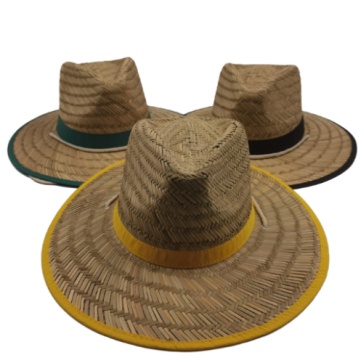
Once the weaving and structure are perfected, what truly distinguishes a luxury straw hat from an average one is its finishing quality. Skilled manufacturers pay meticulous attention to the small details that enhance both function and beauty.
The edges of the brim and crown are particularly vulnerable to fraying, so they should be cleanly finished. Look for techniques like binding (with fabric or ribbon), stitching, or tight braiding that prevents unraveling. Some premium brands use double-stitch reinforcement to keep the brim durable without compromising flexibility.
Color consistency is another hallmark of craftsmanship. Whether the straw is naturally sun-bleached or dyed, it should exhibit even tonality across the entire surface. Irregular patches, streaks, or discolorations suggest uneven dyeing or poor material sorting.
Natural straw should have a gentle sheen and subtle tonal variations, while synthetic straw should maintain uniform color even under bright light.
A high-quality hat may feature decorative accents such as ribbons, leather bands, embroidery, or woven designs. These should be securely attached, well-aligned, and proportionate to the hat’s overall style. Loose or asymmetrical decorations indicate careless assembly.
Every small detail—from the stitching on the hatband to the alignment of the label—shows how much pride the maker takes in their work.
The best straw hats convey a sense of refined artistry. Manufacturers that emphasize detailed finishing—whether through subtle textures, invisible seams, or elegant trimming—create products that not only look premium but also age beautifully over time.
Even the most stunning hat fails its purpose if it’s uncomfortable. The hallmark of superior craftsmanship lies in achieving the perfect balance between fit, weight, and ventilation.
A true sign of comfort is the inner sweatband—usually made from cotton, leather, or polyester. This band prevents irritation, absorbs perspiration, and helps maintain the hat’s position. Some advanced designs include moisture-wicking or antimicrobial linings, especially for outdoor and summer wear.
The sweatband should be securely stitched with no rough seams and sit flush against the inner crown.
Good straw hats are lightweight yet durable. Whether made from natural raffia, paper straw, or synthetic blends, they should allow air to circulate while providing sun protection. A breathable design ensures you can wear the hat for hours without discomfort.
Natural materials like raffia or wheat straw excel in this regard, as they are both airy and thermally balanced—cool in summer yet firm enough to hold shape.
High-quality straw hats often include adjustable inner bands, elastic straps, or size-reducing ribbons that provide a custom fit. Some designs even include drawstrings or Velcro adjusters discreetly placed inside the sweatband.
The ideal hat should rest comfortably above your ears and eyebrows, neither too tight nor too loose. A proper fit ensures stability in wind and movement without causing pressure marks.
Always perform a quick wear test—tilt your head, bend, or move around. A well-balanced hat should stay in place without pinching or slipping. If it feels itchy, overly rigid, or causes discomfort at pressure points, the hat may not be suitable for long-term wear.
Identifying quality straw hats requires careful attention to materials, weaving, structure, finishing, comfort, and durability, combined with sourcing from reliable suppliers. A well-crafted straw hat is lightweight, durable, stylish, and comfortable—attributes that enhance customer satisfaction and brand reputation.
For buyers seeking high-quality straw hats from a trusted supplier, Nanjing Maxship Textile Co., Ltd. offers a wide range of materials, designs, and customization options. Whether you are looking for natural straw, raffia, paper straw, or synthetic options, their expert craftsmanship and reliable production capabilities ensure premium quality for wholesale orders. Visit their website to learn more or contact them directly for inquiries and customization requests.


