

Views: 0 Author: Site Editor Publish Time: 2025-11-19 Origin: Site


Have you ever struggled to get the perfect fit when knitting a hat? Whether you’re a beginner or an experienced knitter, determining the right stitch count is crucial. Yarn weight, needle size, and even personal knitting style all play a role in getting that perfect fit.
In this article, we’ll guide you through the essential steps for calculating how many stitches to cast on for a hat. You’ll learn how to adjust for different yarns, gauges, and head sizes to create a comfortable, well-fitting hat. By the end, you’ll feel confident casting on for your next project.
Before casting on, the first step is to measure the head circumference of the person who will wear the hat. Accurate measurements are essential for achieving a good fit. To measure:
Use a flexible measuring tape, which adjusts easily to the shape of the head.
Wrap it around the widest part of the head, just above the ears and over the forehead.
Ensure the tape is snug but not too tight, allowing for comfort.
For instance, if you are knitting for someone with a 22" head circumference, the target hat circumference should be around 19.8" to account for negative ease. This ensures the hat will hug the head securely.
Here’s a guideline to help you select the appropriate hat size based on age and head circumference. These sizes are based on average measurements, giving you a helpful starting point.
| Age | Head Circumference | Hat Circumference | Hat Length |
|---|---|---|---|
| Preemie | 11–12" | 10" | 4" |
| Newborn | 13–15" | 12" | 5" |
| 3–6 Months | 15–17" | 14" | 5.5" |
| 6–12 Months | 16–19" | 16" | 6.5" |
| Toddler | 18–20" | 18" | 7" |
| Child | 19–21" | 20" | 7.5" |
| Teen | 21–22" | 21" | 8" |
| Adult | 23–24" | 23" | 8.5" |
These measurements are rough estimates. For more precise sizing, it’s always best to measure the actual head circumference whenever possible.
Negative ease refers to the practice of making the hat circumference slightly smaller than the head circumference. This ensures a snug, comfortable fit. For most hats, a reduction of around 10% is ideal. If the head circumference is 22", for instance, the hat circumference should be about 19.8" (or 20").If you're unsure about sizing, starting with a pattern that provides suggested measurements can be helpful. Alternatively, you can knit a swatch to adjust the fit based on the yarn's stretch and your knitting style.

Yarn weight significantly affects the stitch count. The heavier the yarn, the fewer stitches you need to cast on per inch, while lighter yarns require more. Each yarn weight typically corresponds to a specific range of stitches per inch. Here's a breakdown:
| Yarn Weight | Stitches per 4" |
|---|---|
| Fingering | 6-8 stitches |
| Sport | 5-6 stitches |
| Worsted | 4-5 stitches |
| Bulky | 3-4 stitches |
For example, if you're working with worsted weight yarn and the gauge is 4.5 stitches per inch, fewer stitches will be needed than if you're using a lighter yarn, such as fingering weight, which requires more stitches.Be sure to check your yarn's recommended stitches per inch (often found on the yarn label) to help calculate the correct stitch count. If you're unsure, knitting a gauge swatch will give you a better sense of the yarn's true measurement.
Needle size plays an essential role in determining your stitch count. A larger needle size creates a looser gauge, meaning fewer stitches per inch. In contrast, a smaller needle creates a tighter gauge, requiring more stitches per inch. If you use needles that differ from the recommended size, your stitch count will be affected.Always test your gauge before beginning the project. If the pattern recommends 20 stitches per 4" and you use a larger needle, you might only get 18 stitches per 4", which could change the overall size of your hat.
A gauge swatch is crucial for confirming that your knitting tension is correct. Gauge swatches ensure that the fabric you knit matches the pattern's expectations, allowing for proper sizing. Even small differences in gauge can lead to significant changes in your project’s size.
Tip: If your gauge doesn’t match the pattern’s recommended measurements, try adjusting your needle size until it does. You can also use a different yarn that more closely matches the required gauge.
To calculate the correct number of stitches to cast on, use this simple formula:
Hat Circumference / 4 * Stitches per 4" = Total Stitch Count
For example, if you need a hat circumference of 22" and your gauge is 23 stitches per 4", the calculation is:
22 / 4 = 5.5
5.5 * 23 = 126 stitches
Always round to the nearest even number to ensure symmetry, especially if you're knitting ribbing or other patterns that require an even stitch count.
| Hat Circumference | Stitches per 4" | Stitch Count Calculation | Total Stitch Count |
|---|---|---|---|
| 22" | 23 | 22 / 4 * 23 | 126 stitches |
| 24" | 20 | 24 / 4 * 20 | 120 stitches |
| 20" | 25 | 20 / 4 * 25 | 125 stitches |
When knitting a hat with ribbing or patterns, it’s essential that your stitch count matches the repeat pattern. If you're working with 1x1 ribbing, for instance, your cast-on number must be divisible by 2. For more complex patterns, such as cables or lace, you'll need to adjust the stitch count accordingly.If the stitch count required is 126, but you're using 1x1 ribbing, casting on 128 stitches will work better, as the pattern will then fit evenly.
If the calculated stitch count isn’t divisible by your repeat pattern, round the number to the nearest multiple of the repeat. This ensures the pattern flows evenly across the hat. For example, if your calculation results in 127 stitches, round up to 128 stitches to ensure a smooth pattern repeat.When rounding, ensure that the stitch count is divisible by the repeat number to avoid disrupting your pattern's symmetry.
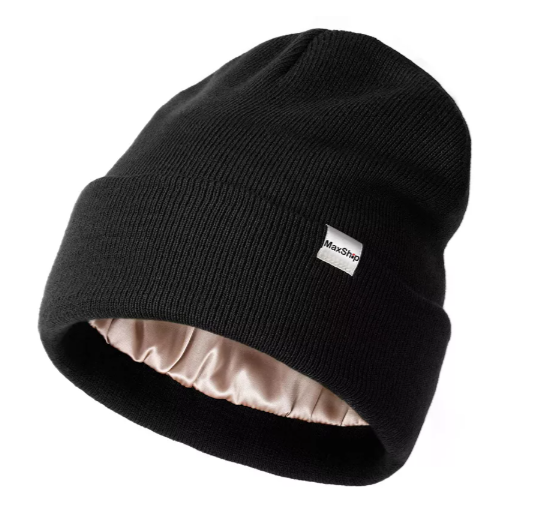
Different hat styles require slight modifications to your stitch count. For example:
Beanie: A close-fitting style that hugs the head snugly.
Slouchy Hat: A looser, more relaxed fit for a laid-back, casual look.
Pom-pom Hats: Ensure the stitch count allows for a smooth, rounded top before adding the pom-pom or other embellishments.
| Hat Style | Fit | Adjustments Needed |
|---|---|---|
| Beanie | Close-fitting | Use a snug stitch count for a tight fit |
| Slouchy Hat | Loose fit | Add extra stitches for a relaxed look |
| Pom-pom Hat | Varied fit | Ensure a smooth top before adding pom-pom |
The type of yarn you use, along with your knitting tension, plays a significant role in how the final hat fits. Yarn with high elasticity will stretch, meaning fewer stitches are required to create the same circumference. On the other hand, if you use a firmer yarn that doesn't stretch much, you may need to add more stitches to ensure the hat fits comfortably without being too tight. This is especially important when working with different yarns that vary in thickness or stretch. Adjusting your stitch count based on the yarn’s properties will help you maintain the desired fit.
The fit of the hat is key to its comfort. A good hat should feel snug yet not too tight, allowing the wearer to move comfortably without any pressure points. When knitting for someone else, consider their head shape, hair texture, and personal preferences. For example, if you’re knitting for a child or someone with thicker hair, you might need to add extra stitches to ensure the hat fits over their hair comfortably. The fit should be secure, but not so tight that it causes discomfort. Remember, a well-fitting hat enhances the wearer’s experience and adds to the overall appeal of your handmade creation.
One of the most common mistakes knitters make is casting on either too many or too few stitches. This often happens when estimations are made without using a gauge swatch. Overestimating can result in a hat that is too large and doesn't fit properly, while underestimating can lead to a hat that is too tight, uncomfortable, or unwearable. It’s always crucial to double-check your gauge before you begin knitting. By calculating the stitch count accurately, you can avoid unnecessary adjustments and ensure your hat will fit just right.
Inconsistent gauge is a common issue, particularly for knitters who are still honing their skills. Beginners may knit too tightly, resulting in a smaller, tighter hat. Meanwhile, more experienced knitters might experience slight differences in their tension over time. This can lead to uneven results, where certain parts of the hat are too tight while others are too loose. To prevent this, it’s important to periodically check your gauge throughout the project. By doing so, you can ensure that your hat will fit as intended and avoid any unwelcome surprises during the knitting process.
Determining how many stitches to cast on for a hat involves understanding your gauge, choosing the right yarn, and selecting the appropriate needles. These steps ensure a well-fitting and stylish hat. Don't hesitate to experiment with different materials and techniques to create unique designs. Once you've mastered the basics, explore custom patterns to personalize your hats.
For high-quality hats, Nanjing Maxship Textile Co.,Ltd offers a wide range of stylish and comfortable designs. Their collection ensures that customers can find the perfect hat for any occasion. Whether you need a beanie, slouchy hat, or something more unique, their products provide the ideal fit and style for your needs.
A: To calculate the number of stitches, measure the head circumference, choose the right yarn and needle size, and check your gauge. Use the formula: Hat Circumference / 4 * Stitches per 4" = Total Stitch Count.
A: Negative ease helps the hat fit snugly. For example, if the head circumference is 22", cast on for a hat that’s around 20" to ensure a comfortable, secure fit.
A: Thicker yarn requires fewer stitches per inch, while finer yarns need more. Adjust your stitch count based on the yarn’s weight to maintain the correct fit.
A: It’s best to use yarn with the recommended gauge for your pattern. Using the wrong yarn weight can affect the hat’s size and overall fit.
A: Check your gauge and stitch count. If the hat is too tight or too loose, adjust the stitch count or try a different needle size for a better fit.


