

Views: 0 Author: Site Editor Publish Time: 2026-09-30 Origin: Site


When the temperature drops, brand visibility should never freeze over. Winter campaigns present a distinct opportunity to keep your corporate identity front and center. Few tools accomplish this as effectively as customized cold-weather gear. Whether you are outfitting a field logistics team, launching a seasonal merchandise line, or organizing an end-of-year corporate giveaway, headwear serves as a highly visible, functional marketing asset.
However, securing a promotional winter hat in bulk goes far beyond picking a basic color and uploading a standard image file. Modern B2B procurement demands a rigorous, technical approach. The ultimate success of your seasonal campaign hinges on three critical manufacturing pillars. These include material selection, logo application techniques, and navigating Minimum Order Quantities. This comprehensive guide breaks down these variables to help you engineer the perfect inventory for your brand.
Material Dictates Performance: The yarn you select determines warmth, durability, and cost. Synthetic fibers remain the industry standard for promotional items due to their exceptional cost-to-quality ratio and windproof characteristics.
Logo Application Defines Brand Identity: The choice between surface embroidery and knitted-in patterns must be driven by your artwork specifications. Embroidery suits classic corporate logos, while jacquard knitting is mandatory for large, integrated graphics.
Volume Controls Unit Economics: Grasping how a supplier calculates minimum order thresholds is fundamental for procurement. Higher order volumes dilute machine setup costs, drastically reducing the price per piece.
Strategic Procurement Timelines: Custom apparel manufacturing requires substantial lead time for loom calibration and physical sampling. Balancing material selection, logo complexity, and volume early prevents supply chain bottlenecks before peak winter demand.
Current market analysis reveals a massive pivot away from disposable promotional goods. Procurement directors now prioritize retail-grade aesthetics and functional longevity over sheer volume. Modern consumers and B2B clients quickly discard cheap, novelty merchandise. This shift demands higher material standards, such as windproof properties and ultra-soft textures, ensuring the end-user actually wears the garment in harsh conditions. By providing a well-crafted piece of winter headwear, brands deliver a tangible, high-quality experience at a fraction of the cost of heavy outerwear. When manufactured with premium yarns and precise branding, these hats are perceived as high-end accessories, instantly elevating your corporate reputation.
When evaluating promotional merchandise, buyers must weigh practical utility against brand visibility. Winter apparel presents unique logistical challenges, yet headwear consistently proves to be a reliable, high-yield investment for seasonal campaigns.
Picture a crowded subway commute in late January. While branded polo shirts and lanyards are buried beneath heavy overcoats, headwear remains entirely visible. A custom hat sits directly at eye level, capturing immediate attention during standard face-to-face interactions. This strategic placement offers sustained brand exposure in outdoor environments where other promotional items simply fail to generate impressions.
One of the most significant logistical hurdles in bulk apparel ordering is managing size distributions. Ordering jackets requires estimating the exact ratio of sizes from Small to Extra Large, inevitably resulting in a surplus of unpopular sizes. Fortunately, knit fabrics are manufactured with inherent elasticity. A skull knitted structure provides a highly functional, universal fit. This structural stretch eliminates size-guessing, streamlines the distribution process, and ensures every piece of inventory serves your target audience effectively.
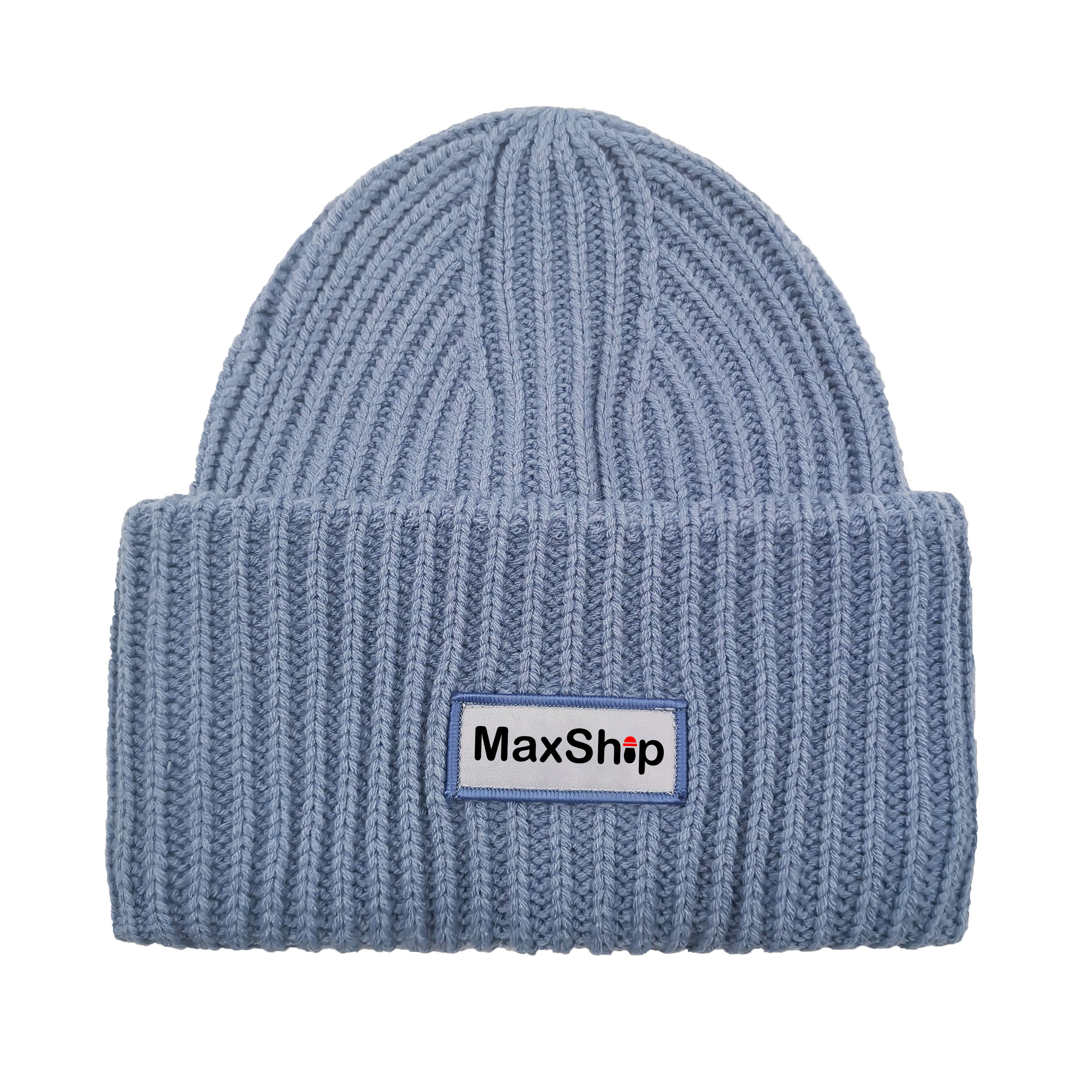
The foundation of any quality winter garment is the yarn used in its construction. Beyond aesthetic choices, material selection directly impacts thermal insulation, tactile feel, color vibrancy, and the final unit cost. Selecting the wrong fiber can lead to poor heat retention or an uncomfortable, itchy texture.
For empirical reasons, synthetic fibers dominate the promotional headwear market. They are lightweight, highly durable, and inherently resistant to shrinking during wash cycles. Furthermore, synthetics absorb industrial dyes exceptionally well, resulting in vibrant, fade-resistant colors that match corporate branding accurately. Sourcing a premium acrylic beanie constructed from 100% soft yarn ensures excellent wind resistance and a comfortable texture. Unlike low-grade wools, this specific material prevents skin irritation, making it the optimal choice for high-volume, daily-wear promotional runs.
To facilitate precise procurement decisions, review the following technical comparison of common winter headwear materials.
| Material Type | Thermal Insulation | Windproof Rating | Cost Efficiency | Best Application |
|---|---|---|---|---|
| 100% Soft Acrylic | High | Excellent | Maximum ROI | Corporate gifts, field teams, high-volume events |
| Merino Wool Blend | Superior | Moderate | Low | Luxury clientele, extreme sub-zero environments |
| Organic Cotton | Low | Poor | Moderate | Indoor streetwear, mild autumn climates |
Once the foundational fabric is established, the method of applying your brand logo becomes the next critical engineering decision. The manufacturing technique must flawlessly align with your artwork complexity and your overall corporate aesthetic.
Embroidery delivers high-density stitch structural integrity, making it the industry standard for corporate logo application. This meticulous process involves digitizing a logo into a stitch file and utilizing automated, multi-head sewing machines to apply the design directly onto the fabric surface. Opting for an embroidered beanie delivers a three-dimensional, textured finish that conveys rugged professionalism. It withstands repeated machine washing effortlessly. Conversely, it is less suitable for overly complex artwork with microscopic details, as physical threads possess strict thickness limitations.
Rather than applying a logo after the hat is fully constructed, jacquard knitting weaves the design directly into the fabric during the actual loom process. By programming computerized knitting machines with specific yarn colors, the artwork becomes a structural component of the garment. A jacquard beanie is the definitive choice for large-scale graphics, wrap-around text, or complex geometric patterns. Because the design is knitted directly into the substrate, there is no bulky backing material irritating the wearer inside the hat.
For procurement managers, understanding the mechanics of Minimum Order Quantity is essential for budget optimization. This threshold is not an arbitrary hurdle. It is deeply rooted in the physical realities of factory production and machine calibration.
Creating custom headwear involves significant initial setup labor. Heavy industrial knitting machines must be programmed and threaded with specific yarn colors. Embroidery files require meticulous digitization by software engineers, and physical test samples must be run for quality assurance. Suppliers enforce minimum order thresholds to ensure these fixed setup costs are adequately amortized, making the production run financially viable.
The relationship between order volume and unit price is starkly inversely proportional. If a buyer negotiates an order at a bare minimum threshold, the factory setup costs represent a massive percentage of the total bill. This results in a premium cost per unit. Scaling the order to higher volumes distributes those exact same setup costs across a vast number of hats. This economy of scale drastically reduces the unit price of a wholesale knit hat, generating a significantly higher return on investment for your marketing spend.
Transitioning from concept to mass production requires strict attention to technical details. Follow these engineering guidelines to ensure your product meets field requirements.
The physical silhouette dictates functionality. Cuffed styles are the traditional standard, providing extra warmth over the ears and serving as a stable canvas for front embroidery. Alternatively, a slouchy silhouette is designed with extra length to drape casually at the back of the head. This specific cut appeals heavily to younger demographics, tech companies, and streetwear-inspired campaigns, offering a relaxed yet highly comfortable fit.
Maintaining strict brand identity is paramount. When designing your apparel, provide the manufacturer with exact Pantone color matching system codes. While standard pre-dyed yarns cover most basic requirements, exact Pantone matching may require custom yarn dyeing. Synthetic yarns are particularly noted for their ability to hold bright, exact color matches without bleeding during the wash cycle.
Custom apparel cannot be rushed without severely compromising quality control. A standard timeline includes one to two weeks for digitizing and physical sampling, followed by three to four weeks for mass production. International freight shipping adds further transit time based on whether you select air or ocean routing. To ensure inventory is in hand before the first freeze, initiate your procurement cycle in late summer.
Based on manufacturing data and thermal testing, 100% soft acrylic is widely considered the optimal material for promotional headwear. It provides a premium hand-feel, excellent thermal retention, and aggressive windproof characteristics. Synthetic fibers take dye exceptionally well, allowing for precise color matching. While wool offers superior natural insulation, it is significantly more expensive and requires delicate washing procedures.
The choice depends entirely on your target audience and brand image. Cuffed beanies offer a traditional, professional look and provide a double layer of warmth over the ears, making them ideal for outdoor field workers and classic corporate gifting. A slouchy beanie provides a modern, relaxed aesthetic with excess fabric draping at the back. This style is highly recommended if your audience skews younger or if your brand aligns with tech, lifestyle, or streetwear sectors.
The distinction lies in the manufacturing sequence. Embroidery is created by taking a finished blank hat and using automated sewing machines to stitch a logo onto the surface using colored threads. This results in a raised, textured effect. Jacquard knitting integrates the design directly into the structural fabric of the hat during the initial loom process. Jacquard is mandatory for large, full-coverage patterns where thick embroidery would be too stiff.
Because jacquard designs must be programmed directly into the knitting looms, the process requires precise calibration. Generally, the pre-production sampling phase takes 7 to 14 days. Once the physical sample is approved, mass production requires an additional 20 to 30 days. Factoring in transit times, buyers should allocate a total lead time of 6 to 8 weeks for a standard bulk order.
Setting up industrial knitting machines, digitizing artwork, and sourcing specific yarn colors require fixed initial labor costs. When you order a higher quantity, these fixed setup costs are amortized over a larger number of units. Consequently, ordering 1,000 units will yield a significantly lower cost-per-unit than ordering 100 units, drastically improving your procurement efficiency.
The vast majority of promotional knit headwear is manufactured using a universal One Size Fits Most standard. Because skull knitted fabrics possess inherent elasticity, a standard adult beanie will comfortably stretch to accommodate head circumferences ranging from 21 to 24 inches. This universal sizing eliminates the logistical complexities associated with predicting specific size distributions.
A well-engineered piece of winter headwear is much more than just a seasonal garment. It is a strategic, high-retention marketing tool that offers unparalleled visibility in cold environments. By carefully selecting a 100% soft acrylic windproof material, choosing an appropriate logo application that matches your artwork, and leveraging volume economics, you can execute a flawless winter promotion.
When you are ready to invest in bulk cold-weather apparel, remember that technical precision and early planning are your greatest assets. Evaluate your specific campaign requirements, align your design with the right manufacturing techniques, and partner with a reliable supplier. Explore the customizable options at Maxship to source high-performance headwear that keeps your team warm while keeping your brand highly visible all winter long.


